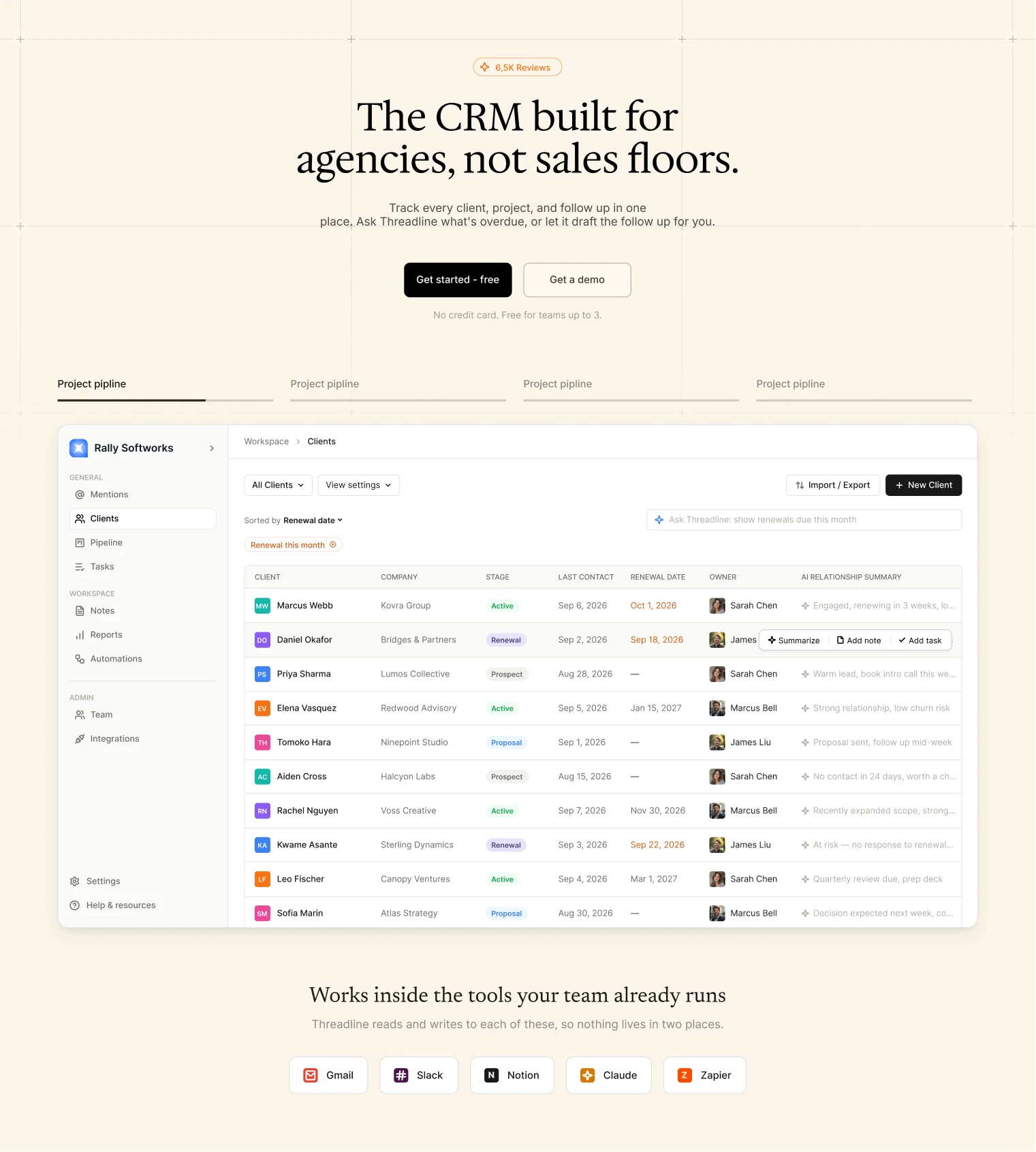
The CRM built for clients, not deals
Challenge
Relationship-first agencies and consultancies don't fit the CRM category as it exists. Every tool on the market, from Salesforce down to newer entrants like Attio, is built around a deal moving through a funnel with a close date and a probability score. That model has no honest mapping onto a five-year retainer that never really closes, so a team using one of these tools ends up configuring a dozen fields that don't apply to how they actually work.
The tools that do fit better, a spreadsheet or a shared inbox, fail for a different reason. Every team I looked at had tried a CRM before and abandoned it, not because it lacked a feature, but because logging a call cost five clicks nobody had a standing reason to keep paying. The system only works if updating it is cheaper than not bothering, and no existing CRM treats that as the actual design constraint.
Underneath both problems was the same open question: could an AI layer take on enough of that upkeep that the team never has to build the discipline themselves, without becoming something people stop trusting with their client data the moment it edits a record on its own.
Approach
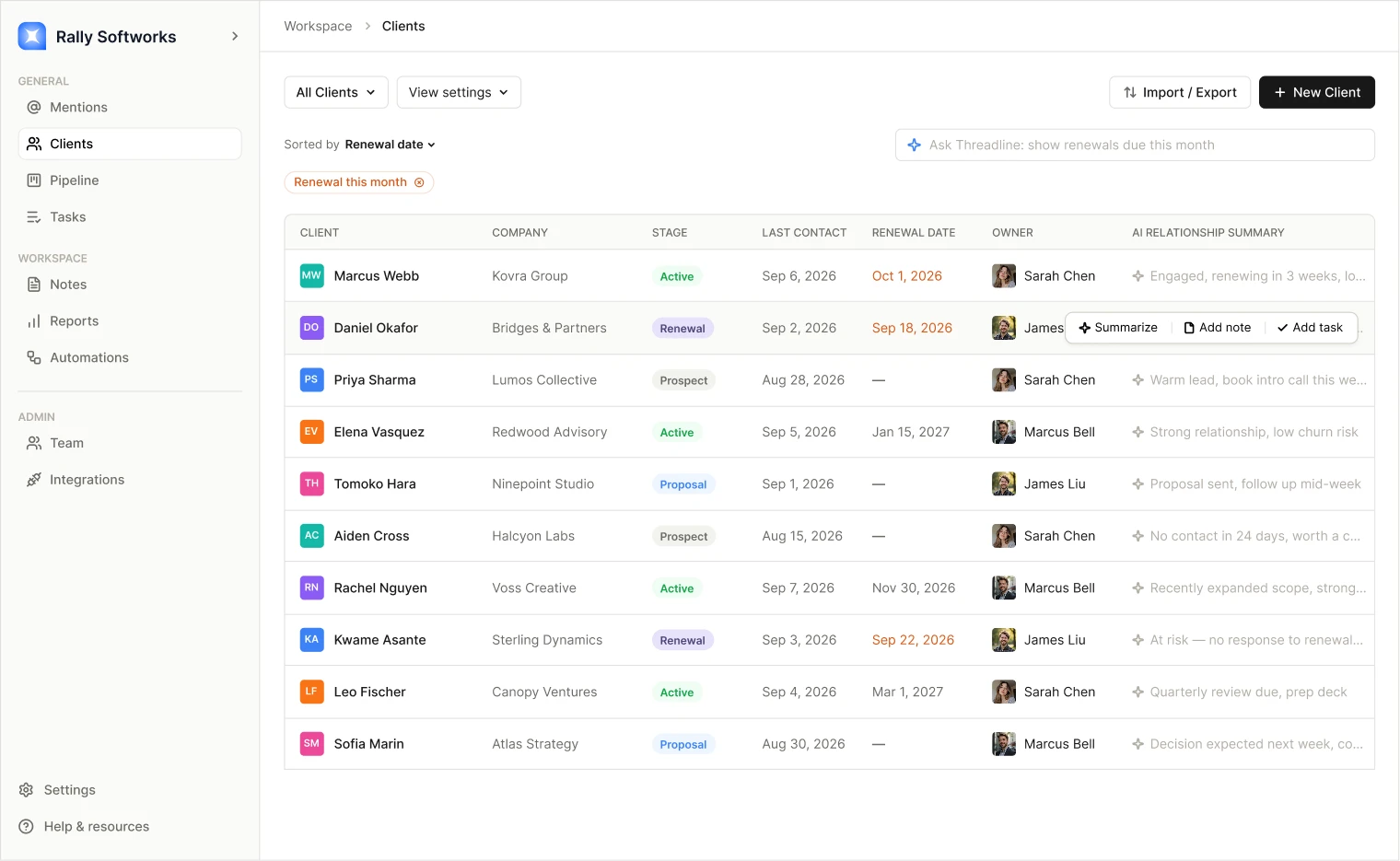
The starting move was to stop treating this as "add AI to a CRM" and instead ask what a CRM looks like if AI handles upkeep from the beginning, rather than sitting on top as a chat panel. That decision shaped everything downstream: instead of designing a table first and bolting a chatbot onto it later, every screen had to answer two questions at once, what does a person need to see at a glance, and what is the AI doing on their behalf that they need to be able to verify.
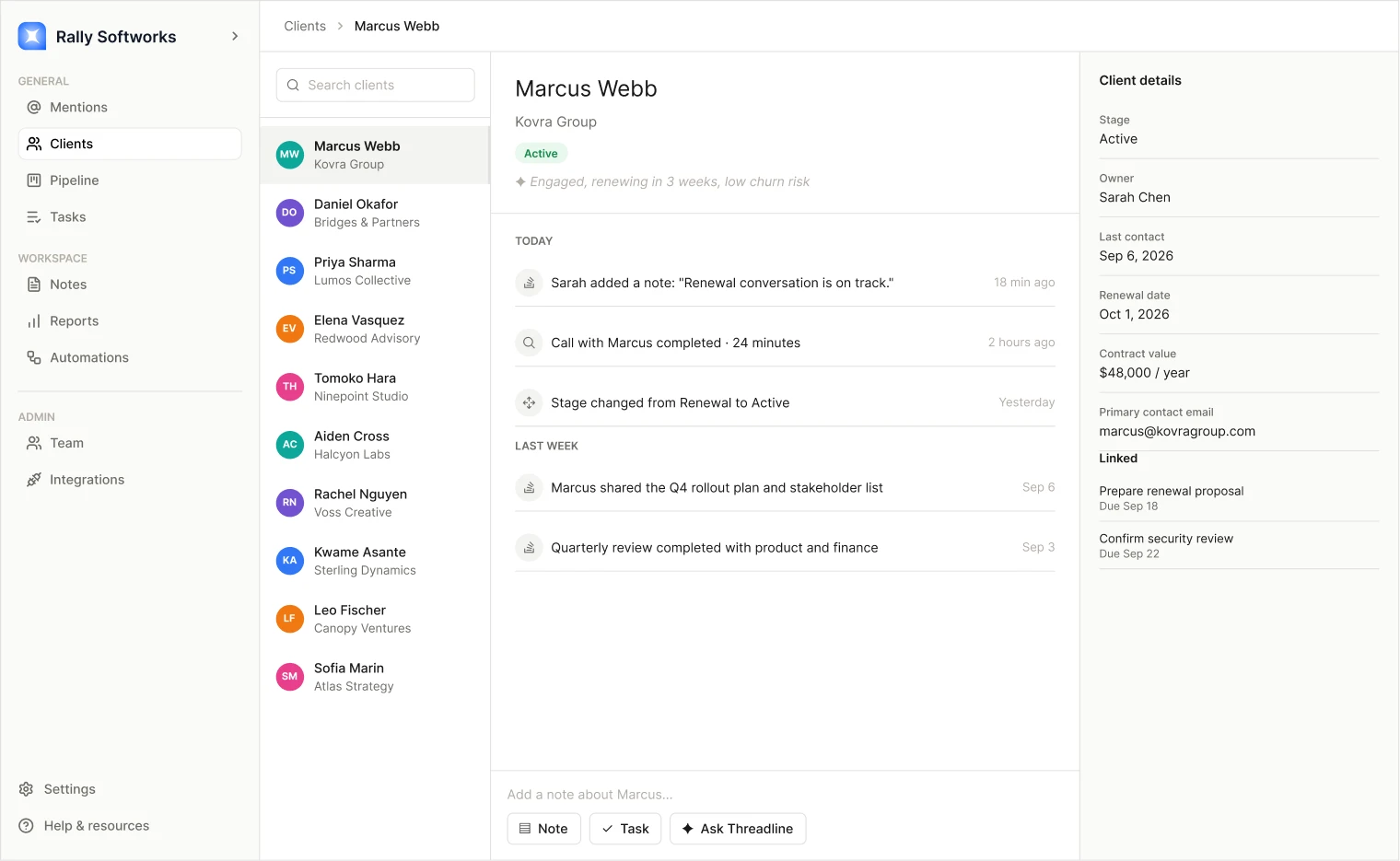
I looked at three references deliberately, not for style, but for a specific mechanic each one gets right. Attio for how a dense table stays legible without feeling like a spreadsheet. Databricks for how a settings-heavy, functional product avoids feeling cold, restraint instead of decoration. Plain for how a detail view organizes a list, a record, and context into three panes without making the person hunt for anything. None of these got copied directly, each one answered a specific layout question the product actually had.
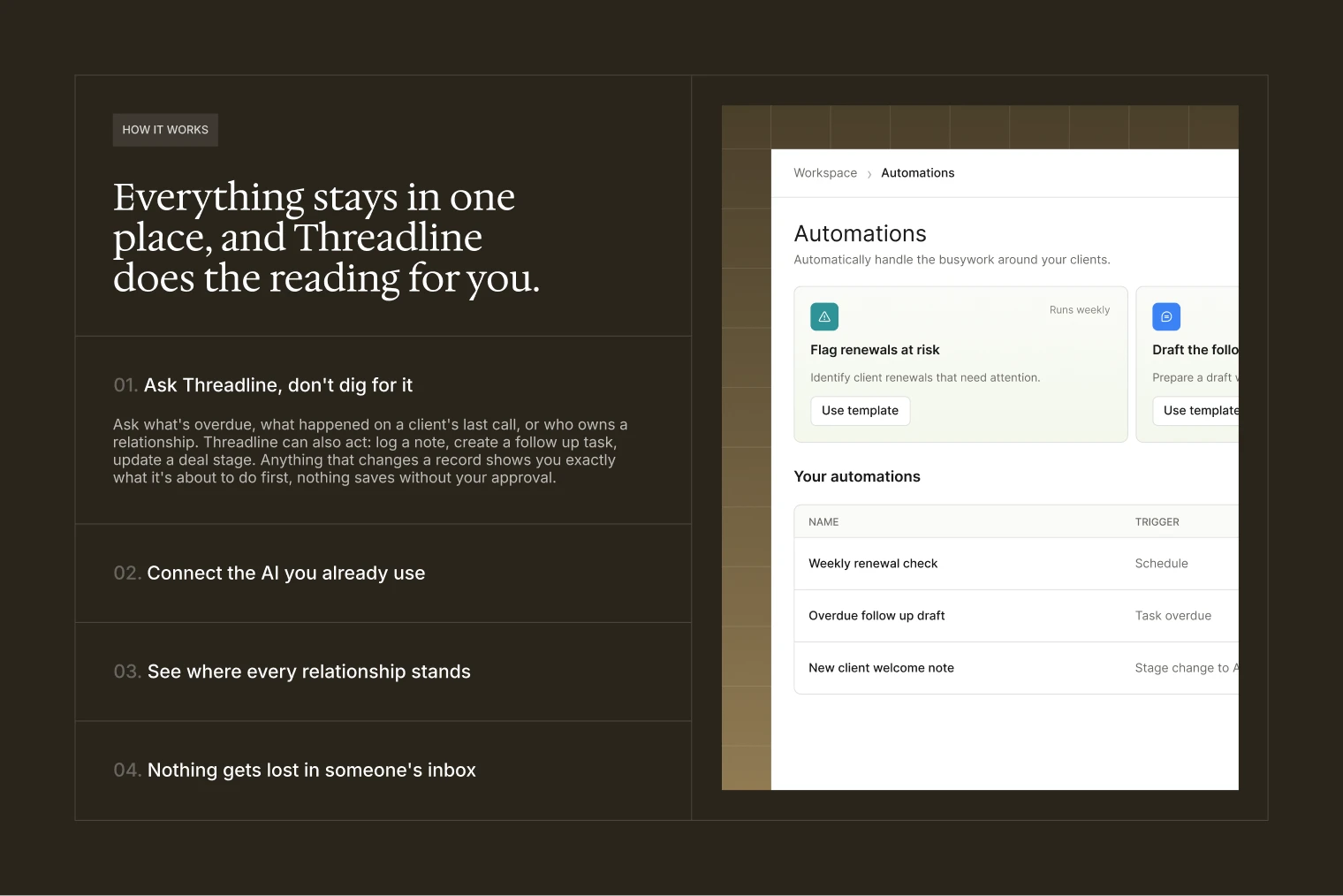
The hardest constraint to hold onto was trust. It would have been easy to let the AI quietly update records in the background and call that a feature. Instead, every action the assistant takes had to render as something the person could see and approve before it saved, which meant designing the approval pattern early and reusing it everywhere the AI touches a record, rather than treating it as a detail to add later. That single constraint ended up shaping the interaction model more than any individual screen did.
What i did
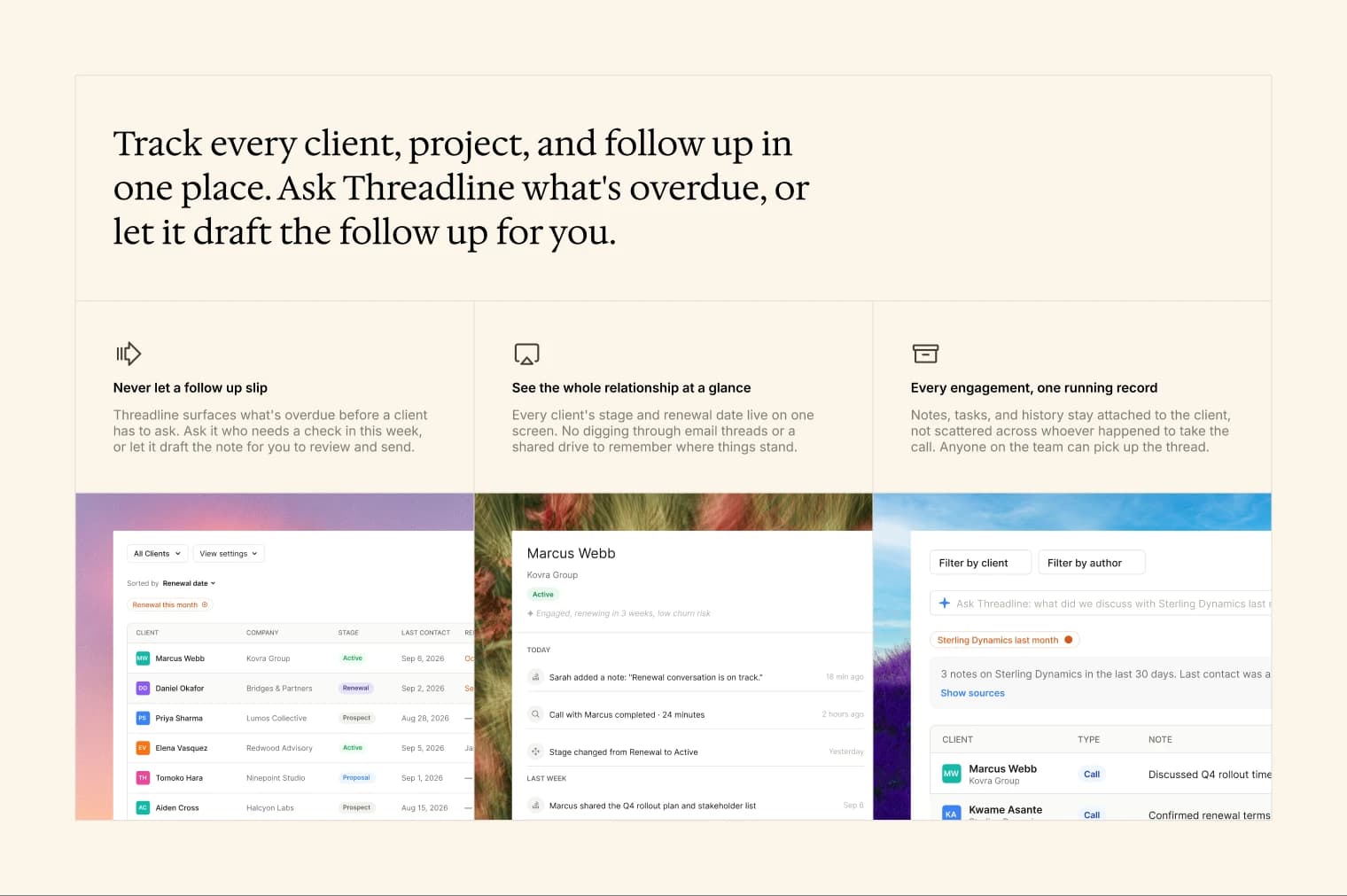
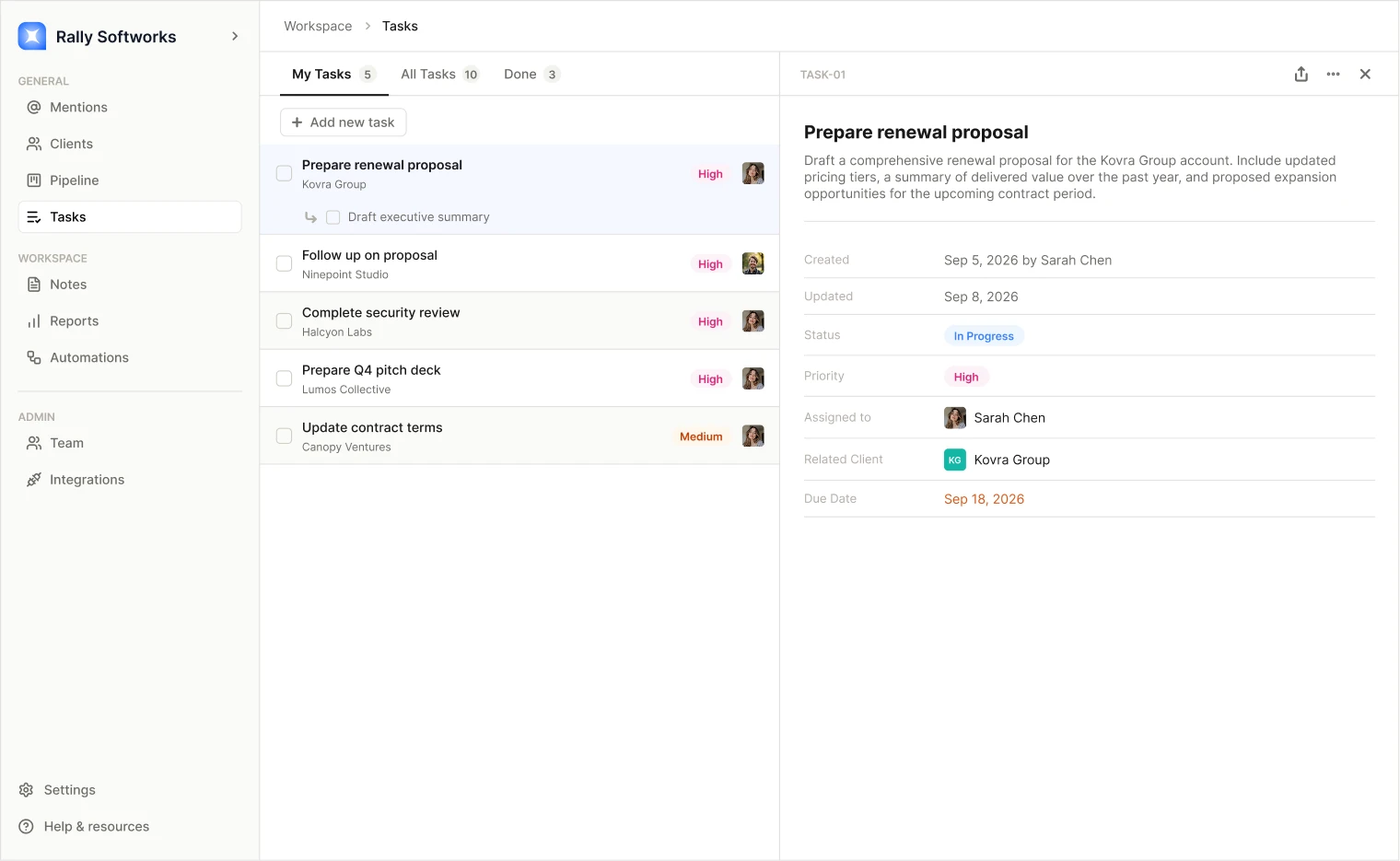
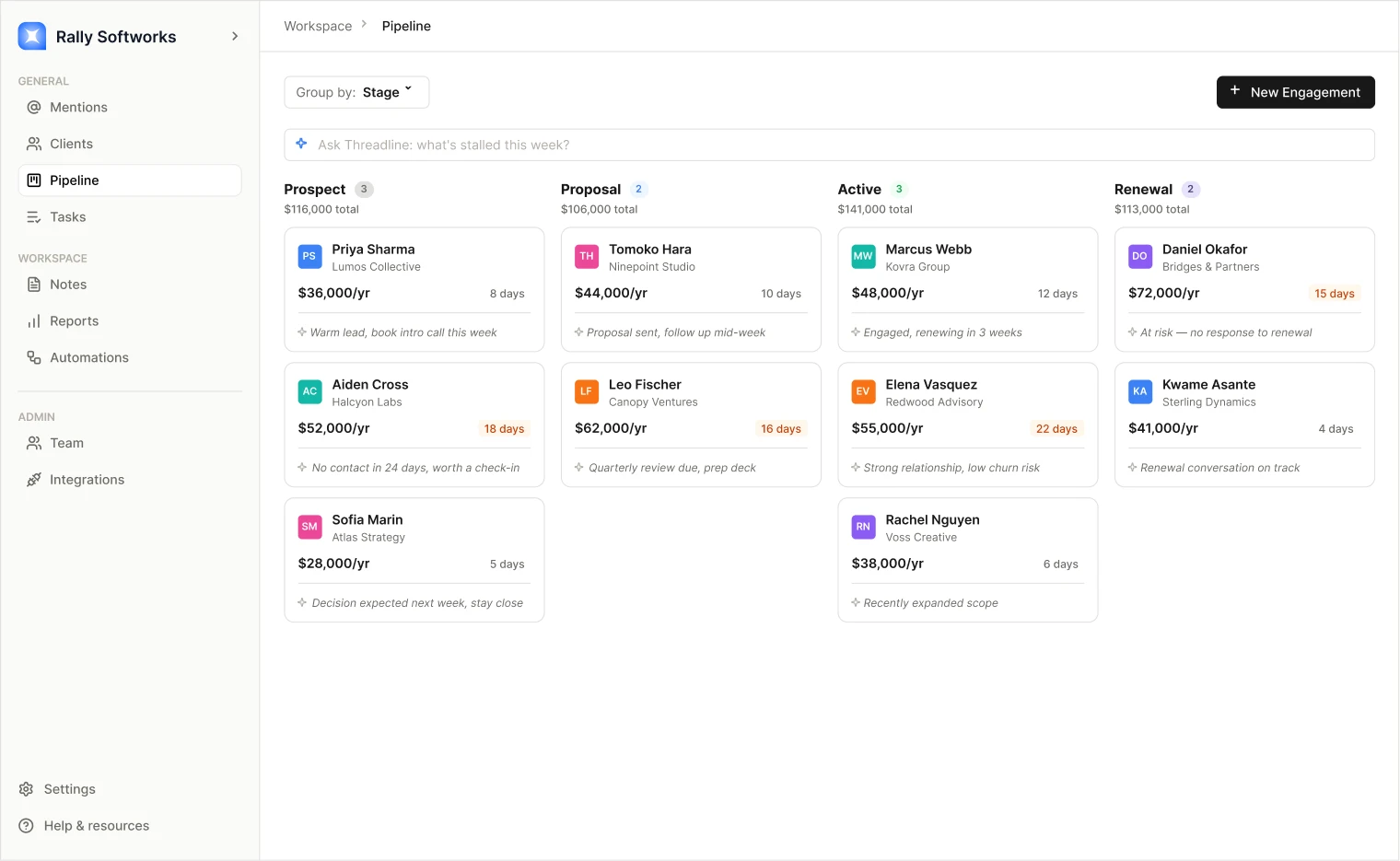
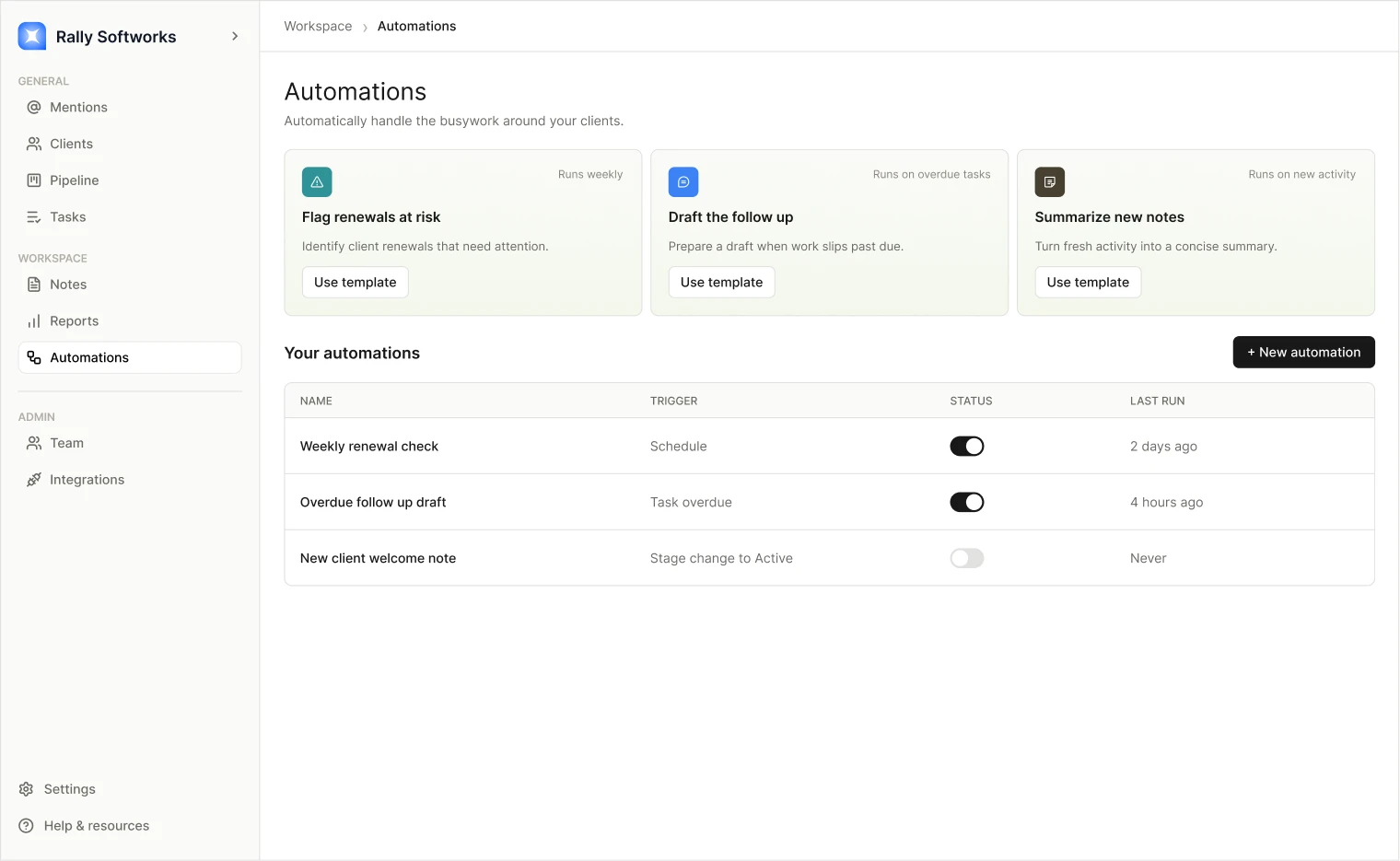
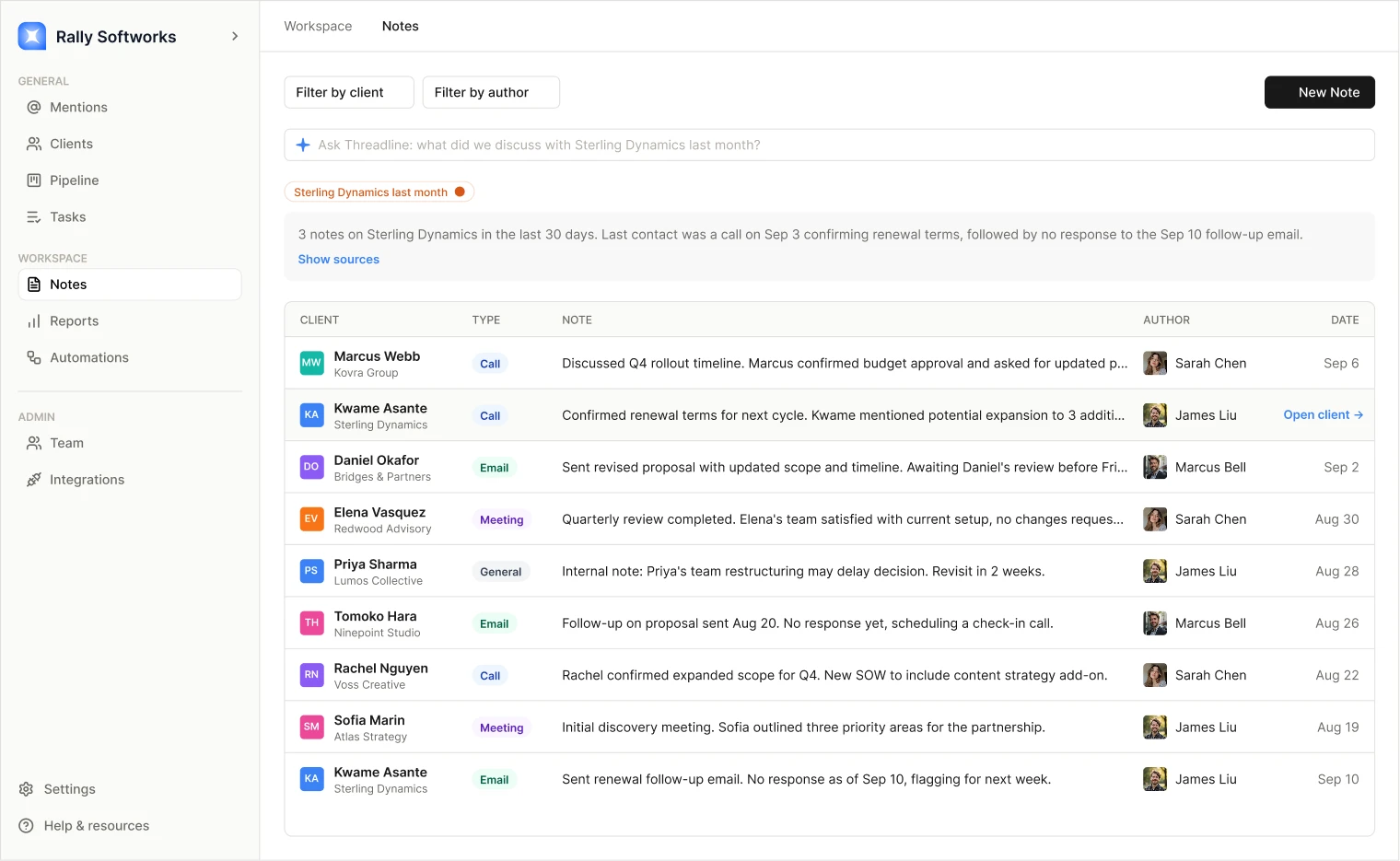
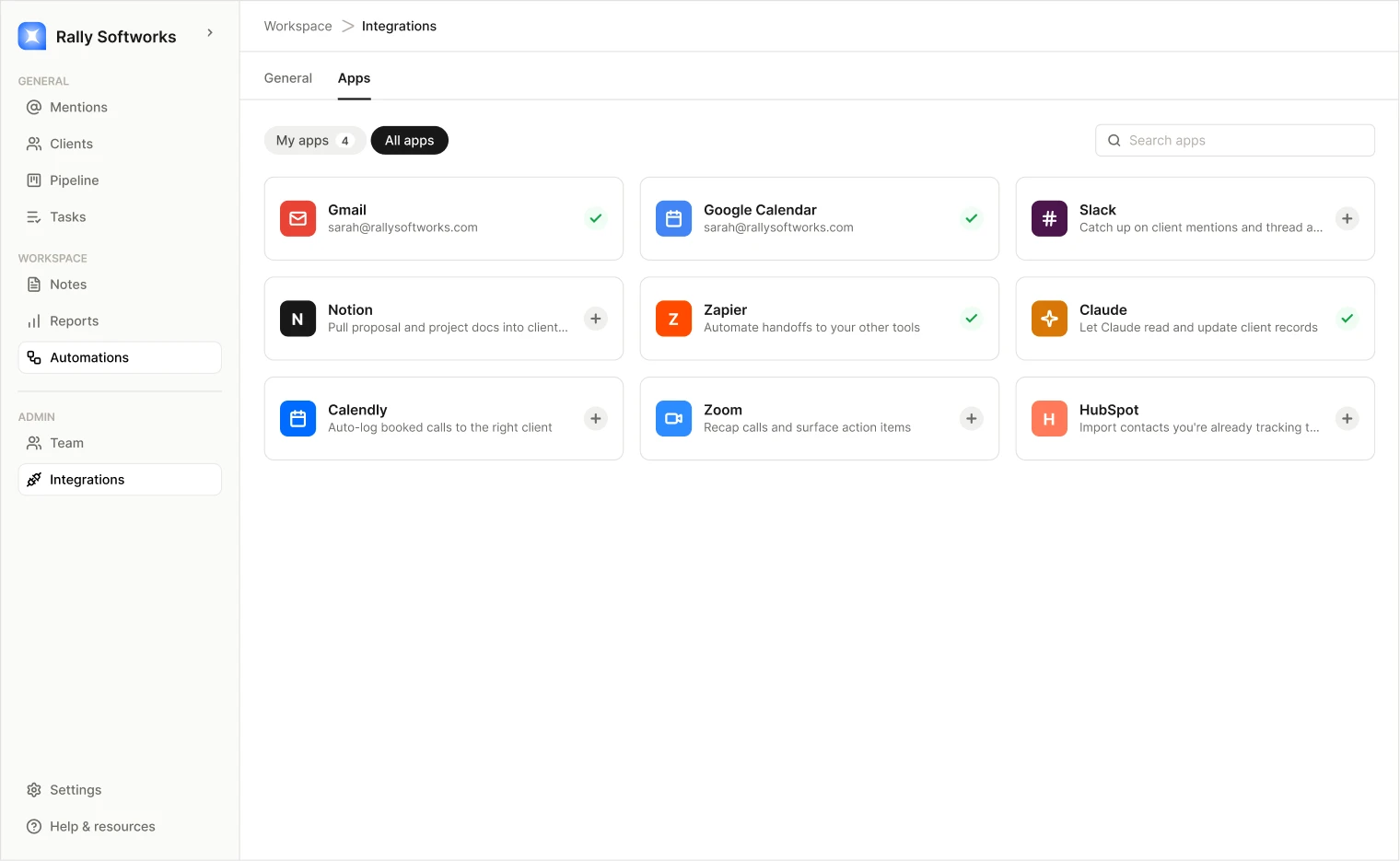
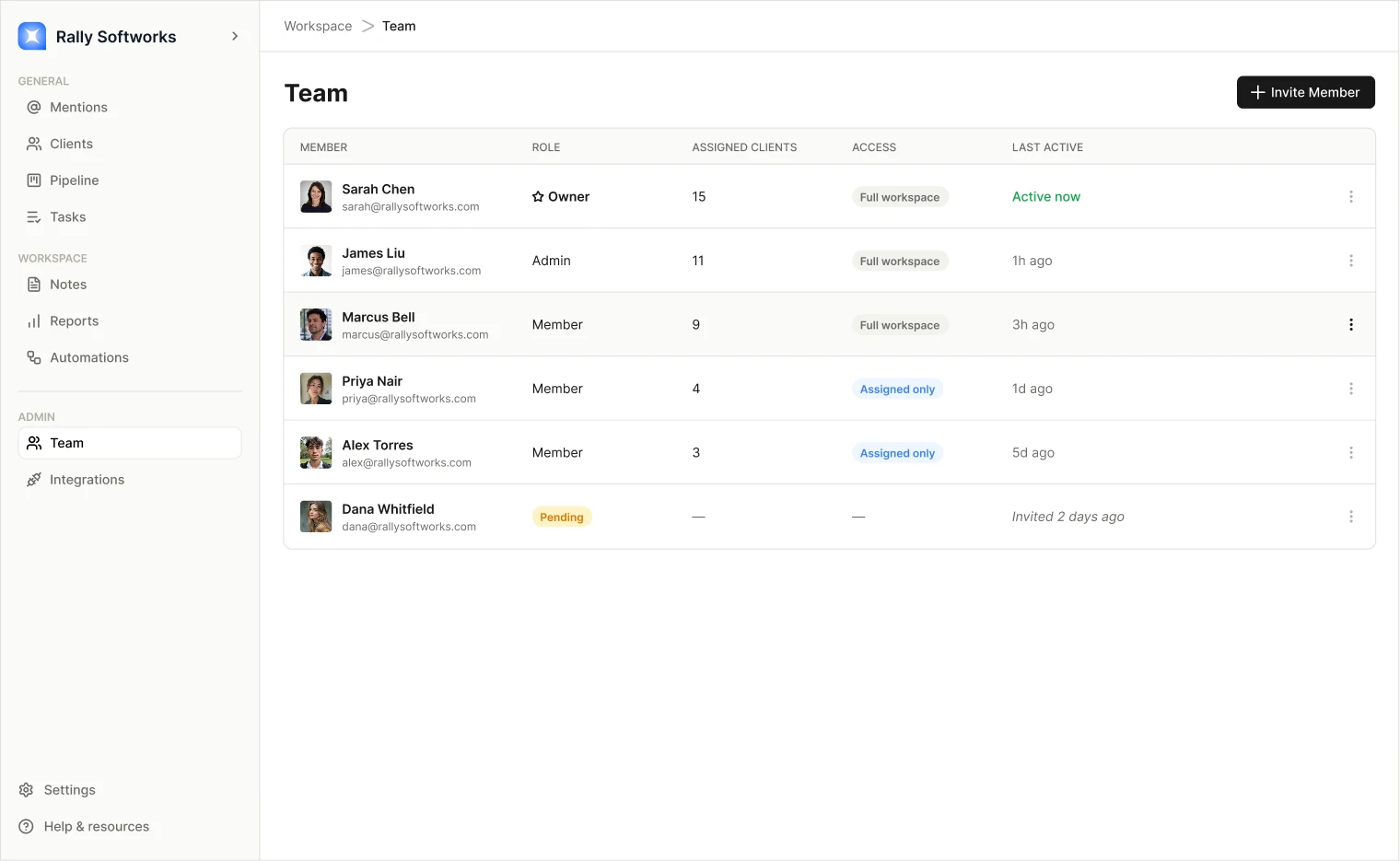
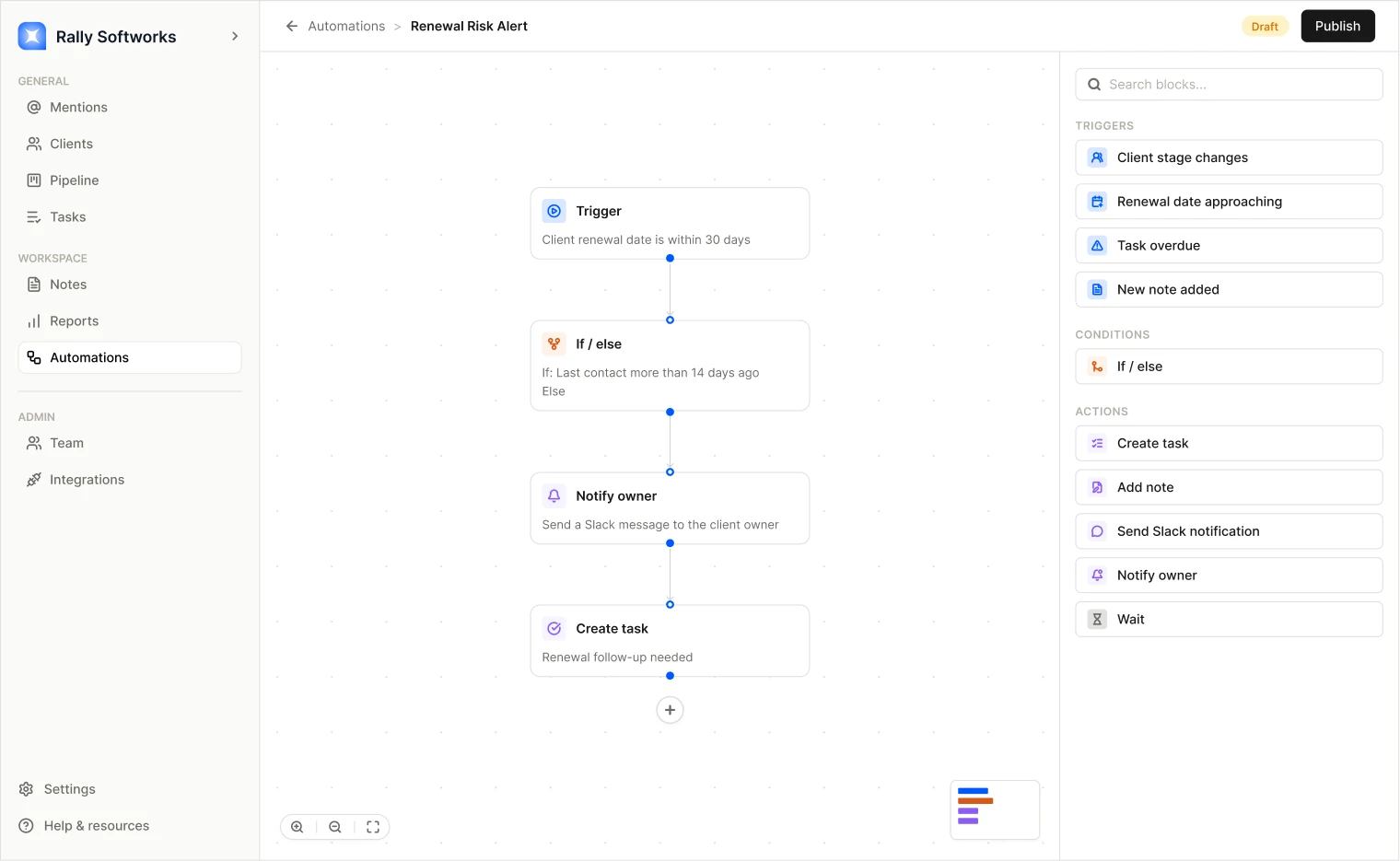
Repositioned the product against the existing CRM category, arguing it against a funnel-shaped tool rather than trying to out-feature one, and carried that distinction through every screen and every line of marketing copy Designed the full product surface: dashboard, client list, client detail, pipeline, tasks, notes, automation builder, reports, team, and integrations, 30+ screens total.
Defined the approval pattern for AI writes early, then reused it as the single interaction model everywhere the assistant creates a note, moves a stage, or drafts a follow up, rather than designing it separately per screen Set explicit boundaries on what the AI wouldn't do, no deal probability, no forecast scoring, no automatic stage advancement, so the product stayed honest to a relationship-first team instead of drifting back into sales-tool patterns
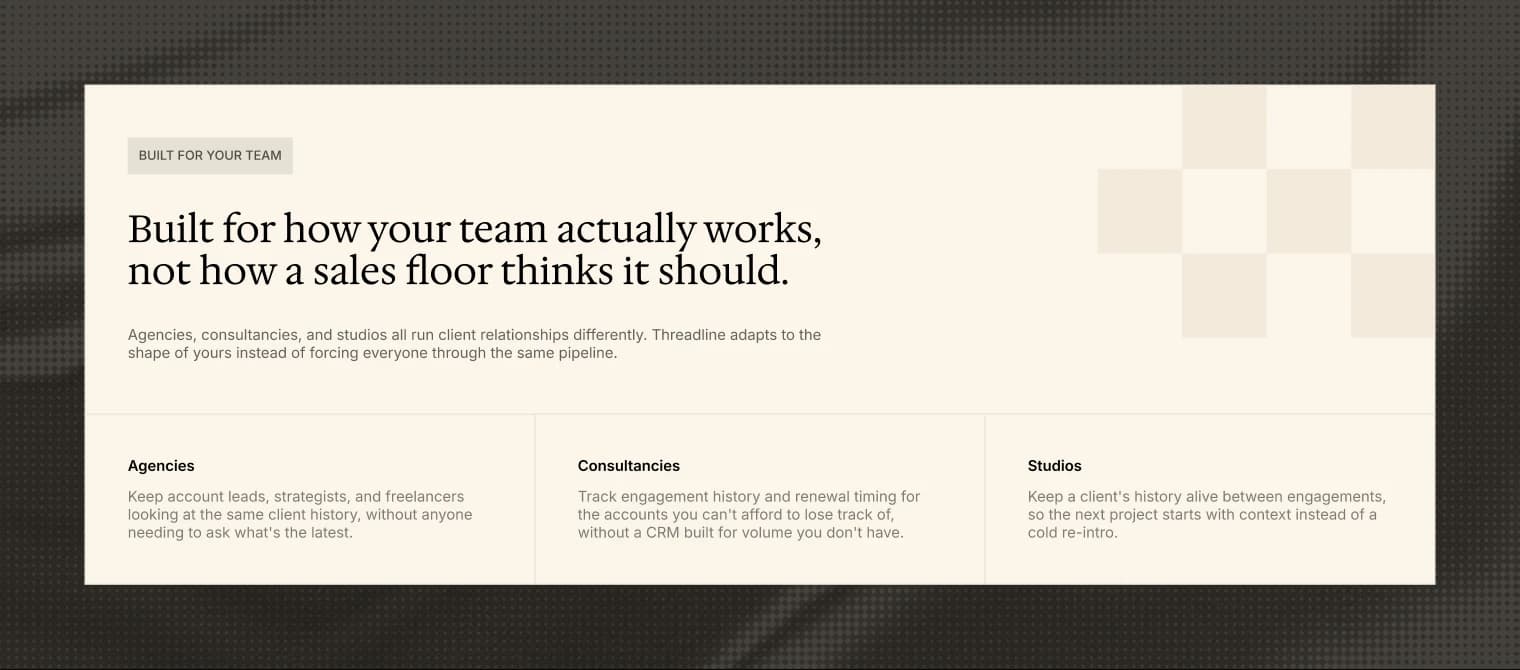
Designed and wrote the marketing site end to end, structure and copy, translating the same constraints from the product (approval before every write, no funnel language) into the positioning argument itself Built one visual system shared across the product and the marketing site, so a person moving from the homepage into the actual app doesn't feel like they've landed in a different product
Outcome
Threadline gives a business a defensible wedge against Salesforce and HubSpot: a narrower product built for a specific underserved segment, agencies and consultancies under 20 people currently overpaying for enterprise tools or stuck on spreadsheets.
It also targets the actual reason CRMs fail in this segment, upkeep costs more than it's worth. AI-driven logging with visible, reversible actions is a direct answer to that churn cause, not a generic AI feature.
The deliverable is a scoped, buildable MVP: 30+ core screens with deliberate boundaries (no forecast scoring, no probability, no auto-advancing pipeline), plus positioning already tested against the competitive landscape.